

Every technology cycle produces a moment when technical capability gets mistaken for market opportunity. Founders start experimenting. A demo drops, and the clip goes viral. Timelines fill with memes as early adopters rush in to ride the momentum. Investors take notice. Social commentators quickly declare the arrival of an entirely new consumer behaviour.
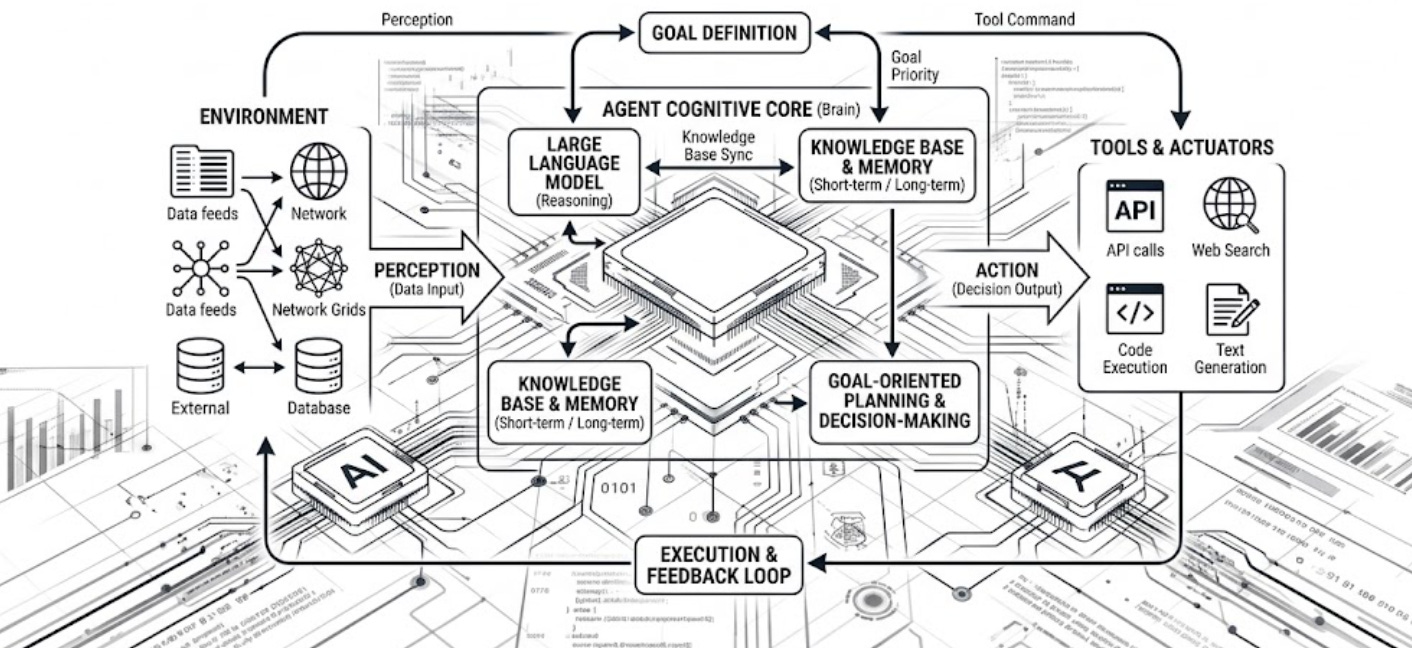
AI agents are currently experiencing that moment.
They can cancel subscriptions, organise an inbox, call a restaurant, compare products, book a holiday, fill out a form, schedule an appointment or chase down a refund. An incredibly impressive array of activities no doubt and certainly things that you had to do yourself a few years ago. The novelty is premium and early adopters double down on this novelty.
But novelty is not the same as mass market adoption. Every capability does not have a defensible and monetisable market behind it. So beyond the “ how cool/novel this is” - there is a much less glamorous question that defines a market opportunity.
How many times do we actually need to use this capability in a a day? Or a month? Or a year?
That question defines frequency and frequency defines mass market adoption, moentisable opportunity and the cost of it. I can cancel my subscriptions using AI. But after its done (which takes between 3-5 minutes), I don’t really need to do it for the next 8-12 months.
So, is subscription deletion a challenge worth solving ? Yes. But can you create a long term business opportunity out of it? That remains questionable.
Capability tells us that a problem can be solved, but it tells us almost nothing about how frequently the problem occurs and whether people will be willing to pay for it after the novelty wears of?
The difference between a great demonstration and a great habit
Let’s consider travel. You are planning a trip. Your prompt to an AI travel agent might be something like this:
“Find me flights to Japan. Avoid overnight connections. Find hotels close to railway stations. Compare the cancellation terms. Work around my children’s school dates. Build the itinerary and book it”
Today’s AI can do this and it does feel extraordinary.
But most people do not plan an international holiday every week or every month. They may undertake a major travel-planning exercise once or twice a year. Even when they do, the exercise of planning it with a family member may be half the fun than outsourcing it to an AI agent.
On the contrary, for the business traveller who travels three times a month an AI concierge may be of incredible value.
But was he not outsourcing this to the company travel desk for decades anyway?
So did AI replace the outsourcing pipe or the travel desk?
The logical answer would be the travel desk but now extrapolate the scale to x thousand employees and all its edge cases and compliance across y thousand companies.
The challenge become slightly more nuanced. You cannot do it end to end.
In short, the use cases are varied.
The same problem appears across many of the canonical personal AI - agent use cases.
Cancel my subscriptions.
Renegotiate my broadband.
Book my dentist.
Return this product.
Find a restaurant.
Compare my insurance.
Sell this old bicycle.
Fill in this government form.
Each is useful. Some save time and money as well . But a product can deliver high value per transaction and still have very low behavioural frequency.
Those are different dimensions.
This distinction has a surprisingly strong empirical foundation outside AI. Research on self-service technologies, for example, has repeatedly found that long-term technology adoption depends not just on satisfaction with an initial interaction, but on repeated behaviour, recency and frequency. Wang, Harris and Patterson followed 626 Australian consumers using supermarket self-checkout over 12 weeks and found a strong carry-over effect from repeated usage: frequent recent behaviour helped create the habit that subsequently sustained use.
That sounds obvious. Yet much of the agent discussion currently focuses almost exclusively on the left side of the equation:
Can the machine successfully complete the task?
Successful consumer products eventually have to answer the other half.
Does that task recur often enough for the product to become habitual?
What people actually use AI for is already revealing
The strongest recurring consumer behaviours on AI are not necessarily the most spectacular ones.
A major 2025 NBER study by Chatterji et al. examined a representative sample of ChatGPT conversations using a privacy-preserving classification system. By July 2025, ChatGPT had reached roughly 10% of the world’s adult population. More importantly, the researchers found that three categories — practical guidance, seeking information and writing — accounted for nearly 80% of usage. Non-work activity had increased from 53% to more than 70% of messages.
OpenAI’s classification of the same usage data makes the distinction even clearer. Around 49% of messages were classified as “Asking” — users seeking information, guidance or advice — compared with roughly 40% classified as “Doing”, where the system generated an output or performed a task.
That matters because the dominant consumer value may not actually be autonomy.
It may be cognition.
That is a fundamentally different proposition than giving an AI agent a list of chores.
Broad adoption does not mean deep adoption of every use case
Menlo Ventures’ 2025 survey of more than 5,000 US adults found that 61% had used AI in the previous six months, but only 19% used it daily.
The leading activities were : writing emails, managing lists, researching topics, writing assistance, meal planning, expense management and organising notes.
Adoption was broad but shallow.
That appears to be changing gradually. Menlo’s 2026 follow-up reports that 25% of US adults now use AI every day and that 22% use general AI assistants daily. Some forms of consumer AI are clearly becoming habitual remarkably quickly.
But it may tell us something important about which forms.
The behaviours achieving frequency are overwhelmingly general-purpose ones which have a very wide behavioral surface. A personal agent centred around relatively infrequent transactions has a much narrower one.
There is a precedent hiding in plain sight
The technology industry has encountered versions of this problem before.
Voice assistants were extraordinary when they first arrived.
Ask a computer what the weather is.
Set a timer by speaking.
Play music without touching anything.
Turn on a light from across the room.
The technology was genuinely impressive. But a technically impressive interface does not automatically create an endlessly expanding set of high-value behaviours.Which is why frequency matters more than a collection of demonstrations.
A consumer product doesn’t ultimately compete on the number of things it is theoretically capable of doing. It competes for a position in someone’s life. And positions in people’s lives are usually occupied by recurring behaviours.
Search succeeds because uncertainty constantly returns. Messaging succeeds because people constantly communicate. YouTube succeeds because boredom constantly returns. Spotify succeeds because people repeatedly listen to music. Maps succeed because people repeatedly move through the physical world. The behaviours reproduce themselves.
An agent needs the same mechanism.
Email may be the strongest argument for the personal agent — and even that is complicated
People receive email constantly. An agent could read it, prioritise it, summarise it, draft responses, schedule follow-ups and complete simple tasks generated by the inbox. That certainly sounds like daily usage. Research also suggests there is real value here.
A 2025 NBER field experiment across 66 companies and 7,137 knowledge workers gave selected employees access to generative AI integrated directly into the applications they already used for email, meetings and writing.
Among the roughly 80% of treated workers who actually used the technology during the latter half of the six-month experiment, employees spent approximately two fewer hours per week on email and also reduced work outside normal hours.
That is meaningful, but these employees already had large volumes of email which was created by their workflow. Their job itself created the frequency. Every consumer. does not need to send minutes of the meeting.
This is why consumer and enterprise agents are very different markets.
Enterprises manufacture repetitive work
A company wakes up every morning and produces tasks. Leads get generated. Support tickets queue up. Invoices and purchase orders get raised. contracts get written and accounts get reconciled. From document processing to customer support to compliance and reporting, an enterprise has a series of workflows that churn repeatable process flows almost everyday.
These processes don’t depend on someone spontaneously deciding that today feels like a good day to use an AI agent. They exist because organisations generate recurring work.
And this is why the allure of agentic automation is structurally so attractive for enterprise companies. Enterprises believe that they can attach an agent to an event
Whenever X happens, perform Y.
So, when a new lead gets created it automatically is sent for enrichment. The frequency is built into the system itself. Organisations can also mandate adoption, redesign workflows and create governance around the technology.
But consumer behaviour is different. Nobody can mandate consumers to use AI agents. The agents have to earn that use.
Even enterprise AI isn’t magically producing value
Enterprises do have very attractive use cases, but there is an important caveat.Recurring workflows do not automatically mean successful agents.
McKinsey reported in 2025 that nearly eight in ten surveyed organisations were using generative AI while roughly the same proportion reported no significant bottom-line effect from it. McKinsey argued that general horizontal copilots had spread quickly while many function-specific use cases remained stuck in pilot stages.
By late 2025, McKinsey’s broader survey found reported AI adoption in at least one organisational function had reached 88%, yet only 7% of respondents said AI had been fully scaled across their organisations.
Frequency cannot always solve for adoption.
Reliability, workflow design, economics, governance, integration and organisational change remain difficult.
The paradox of the spectacular task
Charlier Munger often used inversion. A classic inversion in the category of AI agents is that the use cases that make the best agent demonstrations are not necessarily the best agent businesses.
Autonomously booking an entire holiday looks spectacular. Helping someone rewrite their fifteenth email of the week does not. Cancelling seven unwanted subscriptions feels magical. Answering someone’s tenth question of the day in;t quite as magical. Negotiating a utility bill sounds transformative but summarising another PDF sounds mundane.
Yet consumer behaviour sometimes favours the mundane because of its repetition. A small improvement applied constantly creates cumulative value while a huge improvement applied twice a year remains a feature you admire rather than a product you build your life around.
And there is another friction: trust rises with autonomy
The frequency problem becomes even more difficult because the most valuable personal-agent tasks often require access that harbours on trust.
Booking travel requires payment information. Managing email requires inbox access. Making doctor appointments requirse health information. Handling finances requires banking information. Buying things requires addresses and credit cards.
To gain deeper access, an AI agent needs to earn trust. To earn greater trust, it needs repeated successful interactions. But if the underlying high-value tasks occur only occasionally, the agent gets fewer opportunities to build that relationship.
This doesn’t make the problem impossible. It just makes it much harder than a viral demo suggests.
The personal agent may need to become something else
None of this means consumer agents are doomed. It may simply mean we are defining the category too narrowly. Perhaps the successful personal agent will not primarily be an autonomous errand runner. Maybe it becomes a persistent cognitive layer.
Maybe the future AI agents will remember what I am working on and what remained unsolved. It would deeply understand my projects, notice changes in my life and prepare for things before I asked for them. It would connect the dots across conversations. It would help me navigate my everyday life.
That is a much larger proposition.
It also demands far more sophisticated memory, context, permissions, reliability, judgment and security.
But it may explain why the eventual winner in consumer AI is more likely to resemble an always-available general assistant with agentic abilities than a specialised robot whose primary purpose is booking flights and cancelling subscriptions.
Capability creates attention. Frequency creates the product.
The evidence so far therefore suggests a more nuanced interpretation of the AI-agent boom.
Consumers clearly want AI. Usage is growing rapidly. Deloitte’s 2025 US survey found that 53% of consumers were either experimenting with or regularly using generative AI, with about half of surveyed generative-AI users saying they used it daily.
The question isn’t whether consumer AI has utility. It demonstrably does. The question is whether autonomous personal agency itself becomes a sufficiently frequent behaviour to support another major consumer computing platform. We do not yet have enough longitudinal evidence to answer that conclusively.
And that uncertainty is precisely why today’s demonstrations should be treated carefully.
A product that books my holiday perfectly has solved a difficult technological problem. It has not automatically solved a consumer-behaviour problem. A product that cancels every unwanted subscription has saved me money. It has not automatically given me a reason to return tomorrow. A product that answers email for me may have found frequency — particularly in professional contexts — but then we have to ask whether that behaviour belongs to a separate personal agent, an email application, an operating system, or the general AI assistant I already use.
Those are product questions, not model questions.
And perhaps that is the mistake underneath much of the current excitement. We keep asking what AI agents will be capable of doing. Consumer markets eventually ask something much harsher:
How often do I actually need you?
References
Bick, A., Blandin, A. and Deming, D.J. (2025) ‘The Rapid Adoption of Generative AI’, NBER Working Paper No. 32966. National Bureau of Economic Research.
Chatterji, A., Cunningham, T., Deming, D.J., Hitzig, Z., Ong, C., Shan, C.Y. and Wadman, K. (2025) ‘How People Use ChatGPT’, NBER Working Paper No. 34255. National Bureau of Economic Research.
Deloitte (2025) 2025 Connected Consumer: Innovation with Trust. Deloitte Insights.
Dillon, E.W., Jaffe, S., Immorlica, N. and Stanton, C.T. (2025) ‘Shifting Work Patterns with Generative AI’, NBER Working Paper No. 33795. National Bureau of Economic Research.
McKinsey & Company (2025) Seizing the Agentic AI Advantage.
McKinsey & Company (2025) The State of AI: How Organizations Are Rewiring to Capture Value.
Menlo Ventures (2025) The State of Consumer AI.
Menlo Ventures (2026) The State of Consumer AI 2026.
Wang, C., Harris, J. and Patterson, P.G. (2017) ‘Modeling the habit of self-service technology usage’, Australian Journal of Management, 42(3).
Frequency is a useful screen. The 7,137-worker field experiment found active users spent two fewer hours weekly on email. For agents, I would also track repeat use, permission retention and cost per completed task.